Genpact Hiring 2026 brings an interesting opportunity for experienced technology professionals through its Applied AI Engineer opening. The position is a Forward Deployed Engineer role within Genpact’s AI Value Studio, where engineers work directly with clients to turn complex business problems into production-ready AI applications. The role involves using Claude and other frontier AI models to build agentic workflows, develop integrations and deliver practical AI solutions.
The job posting is also unusually transparent about its technical expectations and interview process, making it easier for candidates to understand what the company values. This guide covers the Applied AI Engineer role, eligibility requirements, technical skills, salary information, interview stages and an important location discrepancy candidates should clarify before applying.
Start here: the location and experience conflict
The Naukri header lists a Bengaluru, hybrid role with 4–6 years of experience, a salary of ₹9–15 lakh per annum and four openings. The description, however, closes with a line saying the role is US-based with a hybrid working model and 25–50% travel to client sites and Genpact delivery centres. Those two statements do not agree.
It is likely the description was written for a wider role and reused for the Bengaluru listing, but the post does not say so. Before investing in a long preparation, ask the recruiter three things: where the job is based, how much travel to expect, and whether the ₹9–15 lakh band applies to the role described. The travel figure, in particular, changes how this job fits into your life.
What a Forward Deployed Engineer does
The post describes someone embedded with enterprise customers to ship production AI applications. You spend most of the week inside a client’s environment and in Claude Code, owning a workstream from first conversation to production. The post lists the work in these terms:
- Building production applications with Claude and other frontier models inside customer systems
- Delivering technical artefacts such as agentic workflows, MCP servers, sub-agents, agent skills, evaluation harnesses and the integrations that connect them to the client’s stack
- Owning discovery, architecture, build, demo and handoff, and making scope, speed and quality trade-offs as you go
- Co-designing with client stakeholders at Director and VP level, then shipping code by the end of the day
- Providing hands-on deployment support, being the person the client trusts when something has to work
- Turning repeatable patterns into reusable code, prompts, skills, runbooks and reference implementations for the wider practice
- Keeping up with new model capabilities and agent frameworks, and feeding field lessons back to product and partner teams
The role reports into an Applied AI Lead and works closely with Anthropic, other AI partners and Genpact’s industry and delivery teams. The word the post leans on is autonomy: it expects people who thrive in ambiguity and represent the company well inside a customer’s walls.
What the post asks for
The requirements read less like a technology checklist and more like a profile of a person.
Experience. Four or more years in a technical, customer-facing role, such as forward deployed engineer, solutions engineer, solutions architect, or software engineer with consulting experience. Former technical founders are explicitly encouraged to apply.
Daily fluency with Claude as a build tool. The post stresses using it to ship every day, not as a chatbot. That is a high bar, and it is the clearest filter in the listing.
Production LLM experience. Advanced prompt engineering, agent development, evaluation frameworks and deployment at scale.
Programming. Strong Python, ideally with one or more of TypeScript, JavaScript, Java or SQL, plus experience shipping production applications.
A shipped result. Something a customer or end user paid for, used or measured: a product, an internal tool, a notable open-source project, or a demo that closed a deal.
Client presence. The ability to hold a conversation with senior stakeholders without a product manager translating.
Temperament. High agency in ambiguous organisations, and a cooperative mindset that balances customer teams, Genpact delivery and partners.
Bonus points. Depth in a regulated industry such as life sciences, financial services, healthcare or insurance. Hands-on use of MCP, agent frameworks such as Claude Code, Cursor or LangGraph, evaluation tooling or LLM observability. Experience in a top-tier product, startup, frontier-lab or consulting setting, or a credible self-built equivalent. Hybrid onshore/offshore delivery experience. Familiarity with security, privacy and compliance for enterprise AI.
What the post says it does not require
This section is unusually generous. There is no specific degree and no preference for any institution. Certifications from Anthropic, AWS or others are nice to have, not required. A traditional machine learning or PhD background is not needed, because the post says it hires builders who use LLMs rather than researchers who train them. If your strength is shipping software with modern AI tools, the listing is telling you the credentials will not hold you back.
Saiket Systems Internships 2026
Students and freshers looking to gain practical experience can also explore Saiket Systems Internships 2026. The program offers opportunities across technology domains such as Python, Machine Learning, Data Science, Web Development, and Software Development, with a focus on practical projects and skill development. Internship duration and eligibility may vary by role, so review the current details before applying.
Ready to get started? Explore available domains and apply through the official Saiket Systems Internship page.
The five-stage interview, and how to prepare for each
The post says the process is designed to evaluate the work rather than the resume, and it lists the stages.
1. Hiring manager conversation (45 minutes). Expect questions about your background and why you want a client-facing AI role. Prepare a two-minute story of the most relevant thing you shipped, and a clear reason you want to be in front of customers rather than behind a desk.
2. Portfolio walkthrough (45 minutes). You bring something you recently built with Claude or a comparable model and explain how you built it. Choose a project where you can discuss the problem, your design choices, where the model failed and how you fixed it, how you evaluated the output, and what you would change. Be ready to be specific about prompts, tools, and how you structured the agent.
3. Live build exercise (90 minutes, pair build or take-home). The post calls this the highest-signal step. You solve a realistic client problem using Claude. Practise by taking a messy business scenario, such as processing a set of unstructured documents or automating a multi-step workflow, and building a working prototype against the clock. Show how you clarify requirements first, break the task down, test as you go and handle edge cases. Narrating your thinking matters as much as the result.
4. Client simulation. A working session with Genpact senior delivery staff and a simulated client stakeholder. Practise listening, asking questions that expose the real problem, explaining trade-offs in plain language and staying calm when requirements shift.
5. Final conversations with practice leadership. Expect discussion of how you would contribute reusable assets back to the practice, how you work with partners and how you handle disagreements.
Skills worth sharpening before you apply
- Agents and tool use. Understand how an agent loops through reasoning and tool calls, how to design tools and sub-agents, and where agents commonly fail.
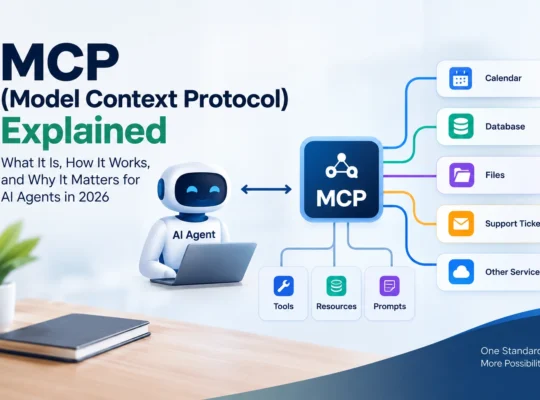
- MCP. Know what the Model Context Protocol does, and be able to describe building or using an MCP server to connect a model to a client’s systems.
- Evaluation. Be able to explain how you test LLM behaviour: building test sets, grading outputs, tracking regressions and deciding when something is good enough for production.
- Observability and reliability. Logging prompts and responses, tracing agent steps, handling timeouts, retries and cost.
- Security and compliance. Handling sensitive data, access controls and the extra care regulated industries need.
- Python and SQL. The everyday languages of integration work.
Who this role suits, and who might struggle
The role fits engineers who like speed, enjoy talking to customers and are comfortable being the single technical point of contact. It may not suit someone who prefers long, well-defined projects, wants minimal travel or wants to specialise deeply in one narrow technology. If the US-based travel description turns out to be accurate for your listing, weigh the 25–50% travel carefully.
Application link –>> https://www.genpact.com/careers
Applying: practical steps
Keep your resume focused on outcomes: what you shipped, who used it and what changed. Add a link to a repository or demo if you have one, because the post values evidence of real use. Mention any regulated-industry exposure, and name the specific tools you use daily, including Claude, agent frameworks and evaluation tools. With four openings listed and over 100 applicants a week after posting, a short, specific note on a project you built with Claude is likely to stand out more than a generic summary.
The salary of ₹9–15 lakh per annum comes from the portal header, and the post says nothing about benefits, so ask about both along with the travel and location questions above.
This article is based on the job posting as listed on Naukri. Salary, location, experience and requirements may change, so confirm all details with the recruiter or Genpact’s careers page before applying.